
How to Make Money on Shopify: 16 Proven Ways
How to make money on Shopify is a common question for anyone looking to start an online business, but the process is often misunderstood. Making money on Shopify requires more than setting up a store. It depends on choosing the right way to earn revenue and executing it consistently over time.
To make money on Shopify, you generally need to get three things right:
- Have a Shopify store that is ready to sell products or services
- Offer something customers are willing to pay for
- Promote it to the right audience using effective channels
When one of these elements is missing, a store may get traffic or even sales but still struggle to become profitable.
In this guide, we break down 16 proven ways to make money on Shopify, covering product based, service based, and ecosystem based models. You will also learn how to promote your Shopify business, avoid common mistakes, and focus on practices that help increase profit instead of chasing short term results.
Why Shopify Works for Different Ways of Making Money
Shopify works for different ways of making money because it supports multiple business models on a single platform. You can use Shopify to sell physical products, digital products, services, or a combination of these without changing your core setup.
It is also important to note that you do not always need a full, complex website to start. Shopify offers a Starter Plan (typically around $5/month) designed specifically for social selling. This allows creators and side-hustlers to sell products directly through links on Instagram, TikTok, or WhatsApp without building a complete online storefront. This flexibility lowers the barrier to entry, allowing you to test ideas with minimal cost.
Making money on Shopify comes down to a simple logic. You need demand for what you sell, a way to bring the right people to your store, and a store experience that turns visitors into paying customers. Shopify does not create demand or sales by itself, but it gives you the tools to manage products, payments, and orders efficiently once demand exists.
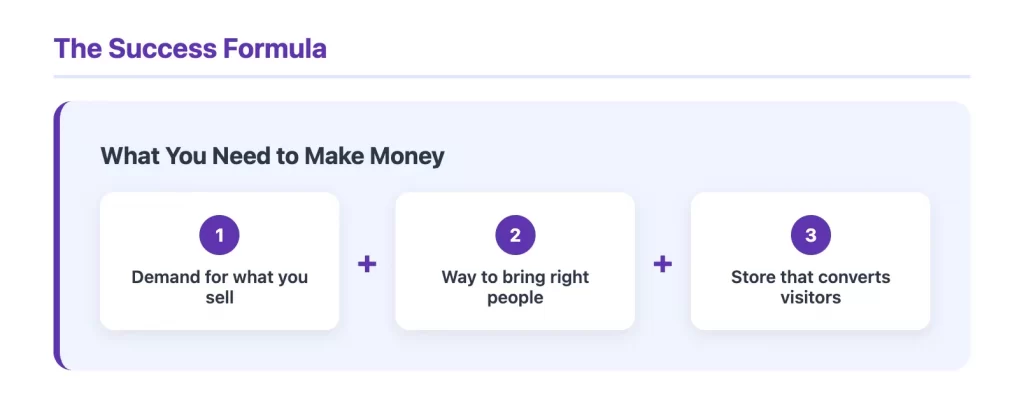
This is why two Shopify stores using the same platform can have very different results. The store that chooses the right revenue model, validates what it sells, and promotes it consistently is the one that makes money. Understanding this makes it easier to choose one of the proven methods in the next section and apply it realistically.
How to Make Money on Shopify: 16 Proven Ways
There is no single best way to make money on Shopify. Different people succeed with different models depending on their skills, budget, time, and goals. Some make money by selling products, others by offering services, and some by building solutions for other businesses.
The 16 ways below represent distinct revenue models, not promotion tactics. Each one explains what you sell, why it can work, what you need to get started, and the main risk to be aware of. You do not need to use all of them. The goal is to identify one approach that fits your situation and execute it well.
1. Do dropshipping
What
Dropshipping is a way to sell physical products on a Shopify store without holding inventory. Orders are sent to a supplier, who handles packing and shipping directly to the customer.
Why
Dropshipping works best for testing product demand with minimal upfront investment. It allows beginners and creators to validate ideas quickly before committing money to inventory or manufacturing.
Need
To make money with dropshipping on Shopify, you need more than a supplier and a store. You need a clear product angle, reliable fulfillment, and a traffic source that can bring buyers, not just visitors. Strong product pages and clear delivery expectations are critical.
Learn more: Best dropshipping apps for Shopify.
Risk
The main risk is low margin combined with high competition. If you sell generic products that many other stores already offer, ads become expensive and profit disappears quickly. Dropshipping is difficult to sustain without differentiation.
2. Sell print on demand products
What
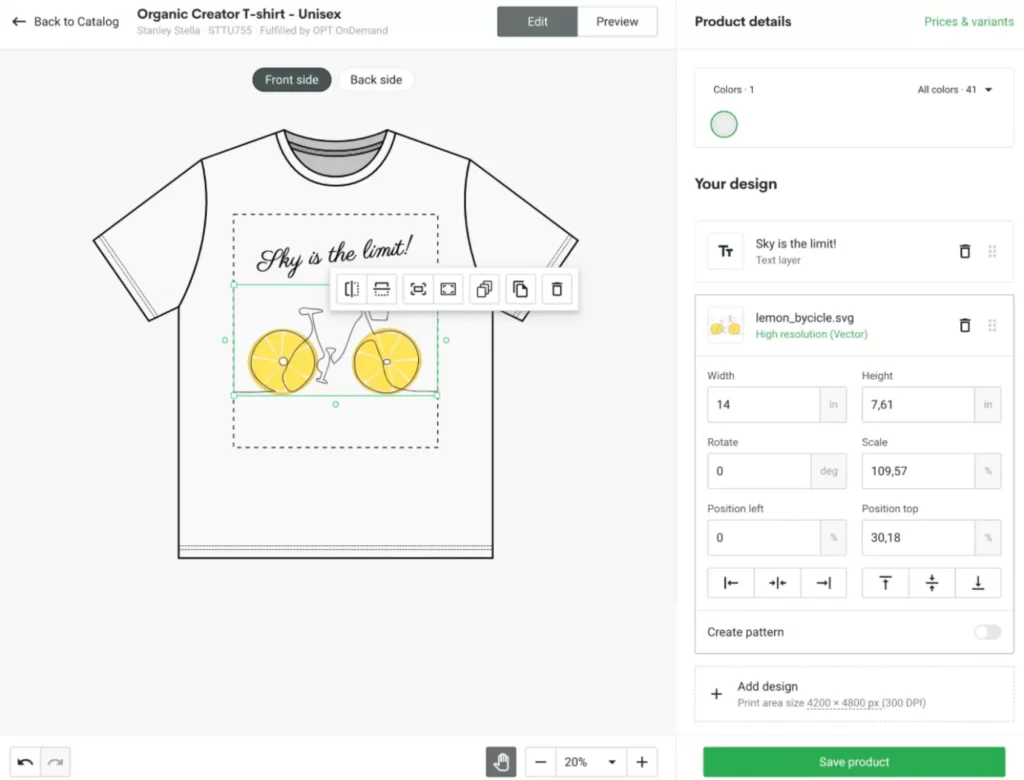
Print on demand means selling custom designed products such as apparel, accessories, or home items that are produced only after a customer places an order. The product is printed and shipped by a third party supplier.
Why
This model works because it removes inventory risk while allowing you to build a brand around design, messaging, or a specific audience. It is commonly used by creators and store owners who want to test ideas without upfront production costs.
Need
To make money with print on demand on Shopify, you need a clear niche, a design concept that resonates with that audience, and a reliable fulfillment partner such as Printify. Traffic usually comes from social media, content, or paid ads, supported by strong product pages.
Learn more: How to connect Printify to Shopify.
Risk
Print on demand has lower margins compared to digital products and often slower shipping times. If your designs are generic or easy to copy, competition increases quickly and profit becomes harder to maintain.
3. Sell handmade and unique goods
What
This model involves selling products that you make yourself or source in small batches, such as crafts, art, specialty items, or customized goods. Each product is differentiated by quality, story, or craftsmanship rather than price.
Why
Selling handmade or unique goods works because it avoids direct price competition. Customers are often willing to pay more for originality, authenticity, or personal connection, which can lead to healthier margins than mass market products.

Need
To make money with this approach, you need consistent product quality, clear positioning, and product pages that explain why your items are different. Strong photos, detailed descriptions, and transparent production or delivery timelines are important for building trust.
Risk
The main limitation of this model is scalability. Production takes time, and growth is often limited by how much you can create or source without lowering quality. Managing expectations around delivery time is also important as demand increases.
In fact, many people ask a common question: Why not use Etsy instead of Shopify? Etsy can be helpful at the beginning because it already has built in traffic and buyers looking for handmade goods. However, Etsy also has clear limitations.
Etsy controls search visibility, fees, and customer relationships. Because of this, it can be difficult to build a long term brand or grow beyond the marketplace. Price competition is also common, which often puts pressure on profit margins.
Shopify offers full control over branding, pricing, and customer data. You decide how products are presented and how customers are contacted after purchase. For sellers who want to build a recognizable brand and grow independently over time, Shopify provides more flexibility and ownership than Etsy.
4. Sell digital products
What
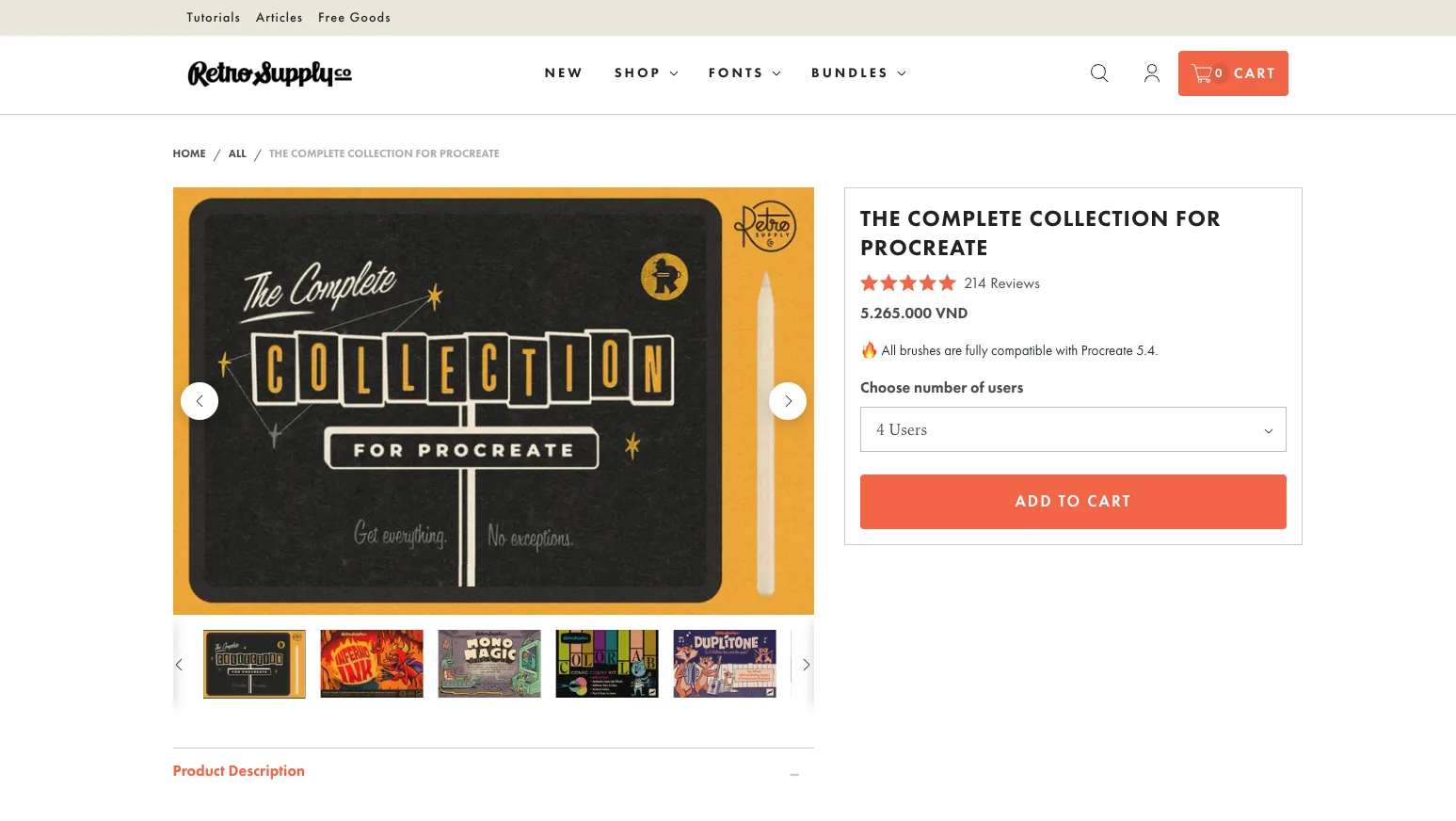
Digital products include items such as ebooks, templates, tools, or online courses that customers can access or download after purchase. These products are delivered digitally and do not require inventory or shipping.
Why
This model works because digital products have high profit margins and can be sold repeatedly without additional production costs. It is especially suitable for creators, educators, or business owners who can package knowledge or skills into a useful format.
Need
To make money selling digital products on Shopify, you need a clear problem to solve, content that provides real value, and a way to reach people who already care about the topic. Clear positioning and trust signals are important since customers cannot see a physical product.
Read more: How to sell digital products on Shopify
Risk
Digital products can be difficult to differentiate if the topic is generic. Poorly structured content or weak marketing can lead to low perceived value and low conversion rates.
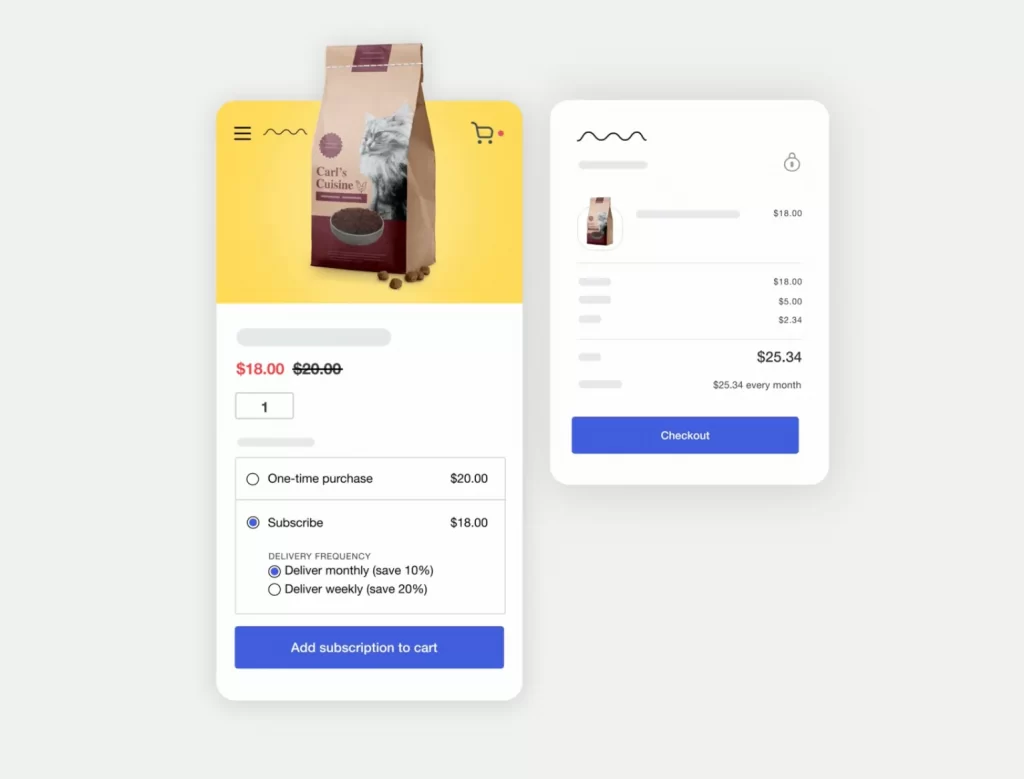
5. Sell subscription products
What
Subscription products involve charging customers on a recurring basis for access to products or services. This can include physical refills, digital memberships, or ongoing access to exclusive content or tools.
Why
This model works because it creates predictable revenue and increases customer lifetime value. Instead of relying on one time purchases, you build income that grows as long as customers continue to see value.
Need
So, how to get sales on Shopify with subscription products? To make money with subscriptions, you need a clear reason for customers to stay subscribed. This often means consistent product quality, regular updates, or ongoing benefits that justify repeat payments. Clear communication around billing and cancellation also matters.
Risk
Subscriptions fail when the value is not obvious or does not improve over time. High churn can quickly cancel out the benefits of recurring revenue if retention is not managed carefully.
6. Sell services or consulting through Shopify
What
This approach uses Shopify as a platform to sell services instead of physical products. Services can include consulting, audits, strategy sessions, or ongoing support related to a specific skill or expertise.
Why
Selling services works because it does not require inventory and often has higher margins than product based models. It is a practical option for freelancers and creators who already have experience they can offer to others.

A good example is Stretch Tents Australia, which uses Shopify to sell and promote custom stretch tent solutions. Instead of selling simple off the shelf products, the store focuses on service driven offerings such as tailored solutions, project consultation, and customer specific setups. Shopify helps present these services clearly while supporting inquiries and conversions.
Need
To make money selling services through Shopify, you need a clearly defined service, a specific audience, and proof that you can deliver results. Clear service descriptions, pricing, and an easy booking or contact process help convert visitors into clients.
Risk
The main limitation is scalability. Income is often tied to time and availability, which can make growth slower unless services are productized or expanded into higher value offerings.
7. Help other business owners set up Shopify stores
What
This model focuses on helping other business owners launch or improve their Shopify stores. Services can include store setup, theme configuration, product setup, migrations, or basic optimization.
Why
This approach works because many business owners want to sell online but do not have the time or confidence to set up a Shopify store correctly. Shopify is widely used, which creates steady demand for people who can help others get started or improve existing stores. You earn money by solving practical problems instead of selling physical products.
But how does this relate to being a Shopify Expert?
Some people call this role a Shopify expert, especially if they join Shopify’s partner or expert programs. However, you do not need an official title or certification to offer these services. Many freelancers and agencies help business owners set up Shopify stores independently by showing real experience and results.
Related article: How to become Shopify Partner.
Need
To make money helping others set up stores on Shopify, you need a clear service scope and examples of your work. Simple packages, transparent pricing, and a clear explanation of what clients get help turn interest into paid projects.
Risk
Like most service based models, income depends on your availability. Without clear boundaries or standardized packages, projects can become time consuming and limit how much you can scale.
8. Sell online courses using Shopify
What
Selling online courses means offering structured educational content such as video lessons, tutorials, or training programs through your Shopify store. Customers pay for access to knowledge rather than a physical product.
Why
This model works because courses can be created once and sold repeatedly with minimal additional cost. It suits creators, professionals, and business owners who have expertise others want to learn.
Need
To make money selling online courses on Shopify, you need a clear learning outcome, well organized content, and a defined audience with a real problem to solve. Trust signals such as previews, testimonials, or clear course outlines help increase conversions.

Shopify does not include native course hosting by default. Because of this, selling courses usually requires Shopify apps that handle content access, user accounts, and digital delivery. These apps allow you to protect course content, manage student access, and deliver lessons in a structured way while still using Shopify for payments and checkout.
Risk
Courses are harder to sell when the topic is too broad or already saturated. Without strong positioning or a clear transformation for the learner, interest and completion rates tend to be low.
9. Build Shopify apps
What
Building Shopify apps means creating software tools that extend store functionality or solve specific problems for merchants. These apps are typically sold through subscriptions or one time payments.
Why
This model works because many Shopify store owners need solutions that save time, improve sales, or automate tasks. A useful app can generate recurring revenue once it gains adoption.
Need
To make money by building apps for Shopify, you need technical development skills and a clear understanding of real merchant pain points. Successful apps focus on solving one problem well rather than offering many features at once.
Risk
App development requires ongoing maintenance and support. Platform changes, competition, or poor user onboarding can limit growth if not managed carefully.
10. Design and sell Shopify themes
What
This model involves creating storefront themes that Shopify store owners can use to design their online shops. Themes are sold as standalone products or bundled with customization services.
Why
Selling themes works because many merchants want a professional looking store without building a design from scratch. A well designed theme that improves usability or conversion can attract steady demand.

Need
To make money designing themes for Shopify, you need strong design and user experience skills, as well as an understanding of how storefront layout affects sales. Clear demos and documentation help buyers trust the product.
Risk
The theme market is competitive, and trends change over time. Ongoing updates and support are often required to keep themes compatible and appealing.
11. Offer product photography services
What
This model involves providing professional product photos for Shopify store owners who need better visuals for their product pages. Services can include studio photography, lifestyle images, or basic photo editing.

Why
Product photography works because images play a major role in online buying decisions. Many store owners struggle to create high quality visuals themselves and are willing to pay for photos that improve trust and conversion rates.
Need
To make money offering photography services for Shopify, you need a clear portfolio, defined service packages, and a simple way for clients to book or contact you. Understanding how images are used on product pages helps you deliver better results.
Risk
This is a service based model that depends on time and availability. Scaling beyond a certain point can be difficult without outsourcing or standardizing parts of the workflow.
12. Sell B2B products on Shopify
What
This model focuses on selling products or services to other businesses rather than individual consumers. Examples include wholesale products, supplies, software-related services, or industry-specific solutions sold through a Shopify store.
Why
B2B selling works well because orders are often larger and repeat purchases are common. Many businesses prefer simple online ordering, and Shopify can support pricing rules, bulk orders, and customer-specific workflows.
Need
To make money selling B2B on Shopify, you need a clear understanding of your target industry and its needs. Transparent pricing, clear terms, and an easy ordering process help businesses feel confident placing larger orders.
Risk
B2B sales cycles are usually longer than B2C. Growth can be slower at the beginning, and customer expectations around support and reliability are higher.
13. Sell both products and services on Shopify
What
This approach combines selling products with offering related services through the same Shopify store. For example, a store may sell physical products alongside setup, training, or ongoing support.
Why
Selling both products and services works because it diversifies income and increases the value of each customer. Services can improve product adoption and create additional revenue without relying only on new sales.
Need
To make money with this model on Shopify, you need clear positioning so customers understand what you sell and how the services fit. Well-defined offers and simple checkout or booking flows are important.
Risk
This model can become confusing if offers are not clearly separated. Without focus, it is easy to spread effort too thin across products and services.
14. Flip Shopify stores
What
Flipping involves building a Shopify store, generating proven revenue and traffic, and then selling the entire business to an investor. Instead of monthly income, you aim for a “liquidity event”, a single large payout often worth 20x to 40x your monthly net profit.
Why
This model works because many investors want to skip the setup phase. They are willing to pay a premium for a store that is already running, has a history of sales, and uses a verified theme. It changes your focus from “running a shop” to “building digital real estate.”
Need
To make money flipping stores, you need clean financial records (P&L statements), consistent traffic sources, and standard operating procedures (SOPs) that make the store easy for a new owner to take over. You will also need to list your store on a reputable marketplace.
Since Shopify closed its internal Exchange Marketplace, sellers now primarily use platforms like Empire Flippers (for higher-value established stores), Flippa (for smaller or starter stores), or Acquire (for SaaS and subscription-heavy stores).
Risk
The valuation of a store is tied heavily to its profit stability. If your store relies entirely on a single viral TikTok video or a volatile ad account, buyers may view it as high-risk and offer a much lower price.
15. Become a Shopify Affiliate
What
This method involves joining the official Shopify Affiliate Program and referring new merchants to the platform. You earn a commission when someone clicks your unique referral link and signs up for a paid Shopify plan.
Why
This works because it requires zero product creation, inventory, or customer service. It is highly effective for educators, bloggers, YouTubers, or agencies who already create content about entrepreneurship or business tips. You are monetizing your influence and knowledge rather than a storefront.
Need
To make money as an affiliate, you need an active audience that is interested in starting a business. You also need to apply to the program and meet their content quality requirements. Success comes from creating helpful content such as tutorials, course reviews, or “how-to” guides that naturally leads users to sign up.
Risk
The main risk is audience fatigue. If you promote the platform too aggres.
16. Monetize as a creator with Shopify Collabs
What
Shopify Collabs is an app and network that connects content creators with millions of Shopify brands. Instead of cold-emailing companies, creators can browse a database of brands to apply for affiliate programs, request free products (seeding) to create content, or generate custom discount codes for their followers.

Why
This model streamlines the relationship between “influencer” and “merchant.” It allows creators to monetize their audience by promoting products they genuinely like, without the hassle of manufacturing their own goods. For brands, it provides a performance-based marketing channel.
Need
To succeed, you need an engaged social media following on platforms like TikTok, Instagram, or YouTube. You do not need a massive audience, but you do need trust. Brands on Collabs look for creators whose aesthetic and audience demographics match their products.
Risk
Promoting low-quality products can damage your personal brand. Since you don’t control the shipping or product quality, a bad experience for your follower can reflect poorly on you.
The 16 ways above are not a checklist to complete, but a set of different income models you can use on how to make money on Shopify. Each one works under specific conditions and requires different skills, resources, and levels of commitment.
Some models favor speed and testing, while others favor expertise or long-term stability. The key is not choosing the most popular option, but choosing one model that fits your situation and executing it consistently.
Once you understand what you are selling and how you earn money, the next step is learning how to promote it and get real sales.
How to Promote and Get Sales on Shopify
Learning how to make money on Shopify also depends on promotion as much as what you sell. Even a good product or service will not generate income if the right people never see it. Promotion is the process of bringing qualified visitors to your store and guiding them toward a purchase.
Instead of trying every channel at once, it is more effective to focus on one or two promotion methods that fit your business model and resources.
1. Choose traffic sources that match your model
Some promotion channels work better for certain models than others. Physical products often perform well with paid ads or social content, while services, courses, and B2B offers tend to rely more on trust and education through content or direct outreach.
Common promotion channels include:
- Paid ads such as Facebook, Google, or TikTok.
- Organic content through SEO or social media.
- Email marketing to follow up with interested visitors.
- Influencer or creator partnerships.
The goal is not volume, but relevance. A smaller number of high intent visitors usually converts better than large amounts of untargeted traffic.
2. Optimize for conversion, not just traffic
Promotion brings people to your store, but conversion turns them into customers. Clear product or service descriptions, transparent pricing, and visible trust signals such as reviews or testimonials play a major role in getting sales.
Before scaling promotion, make sure your product pages, checkout flow, and communication are easy to understand. Improving conversion often increases revenue faster than adding more traffic.
3. Start small and adjust using data
Promotion works best when treated as an ongoing process. Start with small tests, track results, and adjust based on what brings real sales instead of clicks or impressions. Over time, this approach helps you find repeatable ways to attract customers and grow revenue more sustainably.
Promotion works best when it supports a clear revenue model. Once you know what you are selling and who it is for, choosing the right promotion channel becomes much easier. The next sections focus on avoiding common mistakes and applying best practices so promotion leads to profit, not wasted effort.
Common Mistakes When You Try to Make Money on Shopify
If you are learning how to make money on Shopify and things are not working, the problem is usually not the platform itself. In most cases, the issue comes from a few predictable mistakes that many people make when they start or scale a Shopify based business.
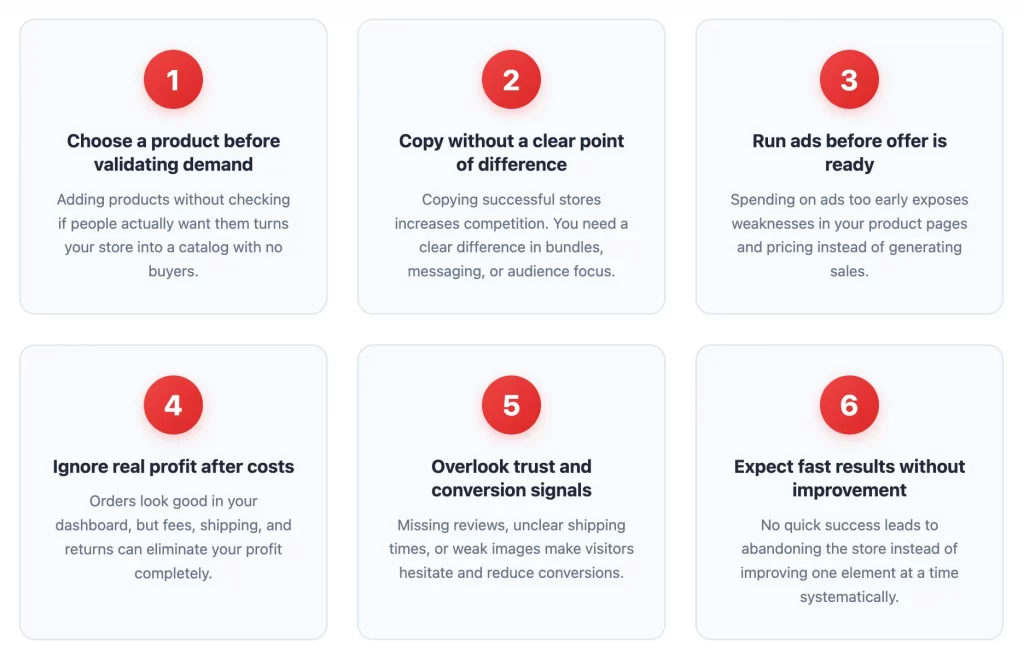
1. Choose a product before validating demand
You may set up products in your Shopify store because they look promising or are trending elsewhere, but that does not mean they will sell in your store. When you add products without checking demand, Shopify simply becomes a catalog with no buyers.
To avoid this, you should validate demand before fully building your store. Look at similar Shopify stores with real reviews, check if products appear in Google Shopping results, and confirm that people are actively searching for or engaging with these products.
2. Copy a business model without a clear point of difference
You might copy another Shopify store’s product selection, theme, or layout because it appears successful. However, Shopify makes it easy for many stores to look similar, which increases competition instead of reducing it.
Instead, you should use Shopify to highlight a clear difference. This can include better product bundles, clearer product pages, stronger messaging, or a more specific audience focus. Shopify themes are tools, not strategies.
3. Spend money on ads before your offer is ready
If you start running Facebook, Google, or TikTok ads to your Shopify store too early, you may assume traffic will solve low sales. In reality, ads often expose weaknesses in your product pages or pricing.
Before scaling ads, you should test your Shopify store with small traffic sources and check basic signals such as add to cart actions, time on page, and checkout completion. Shopify analytics can help you identify where users drop off.
4. Ignore real profit after costs
Seeing orders in your Shopify dashboard can feel encouraging, but those numbers do not show real profit. Shopify transaction fees, payment processing fees, shipping costs, returns, and discounts can quickly reduce margins.
To fix this, you should calculate profit per order using Shopify reports and your cost structure. Understanding these numbers helps you decide which products are worth promoting and which ones should be removed or repriced.
5. Overlook trust and conversion signals
Even when visitors reach your Shopify store, they may hesitate to buy if your pages feel unclear or risky. Missing reviews, vague shipping times, or weak product images often reduce conversions.
You should use Shopify product pages to clearly show pricing, delivery timelines, return policies, and social proof. Small improvements such as clearer descriptions or better images can significantly increase conversion rates.
6. Expect fast results without improvement
If your Shopify store does not make money quickly, you may assume the platform does not work for you. This often leads to abandoning the store instead of improving it.
Making money on Shopify usually requires iteration. When you improve one element at a time, such as the offer, the product page, or the traffic source, you increase your chances of long term success.
Best Practices That Actually Increase Profit on Shopify
Once your Shopify store is live, profit usually comes from making clear decisions and improving them step by step. You do not need complex strategies to succeed on Shopify. Instead, you need to focus on a few important practices and apply them consistently.
1. Validate before scaling
Before you spend more money or add more products, you should first confirm that your store is already working. You can do this by checking if visitors view your product pages, add items to the cart, and complete purchases. If these actions do not happen yet, scaling traffic or ads will only increase costs without improving profit.
2. Focus on one monetization model at a time
Shopify allows you to make money in many ways, such as selling products, services, or courses. However, when you try to run many models at the same time, your message often becomes unclear. You should choose one main way to make money and focus on improving it until it brings steady results. After that, adding another model becomes much easier.
3. Prioritize product pages over design perfection
Many people spend a lot of time adjusting themes and layouts, but design alone does not create sales. Customers usually decide to buy based on product pages, not the homepage. For this reason, you should focus on clear product descriptions, visible pricing, delivery information, and trust signals. When product pages are clear, conversion rates often improve.
4. Use data from Shopify to refine your offers
Instead of guessing what works, you should use real data from Shopify to guide your decisions. Shopify shows information about traffic, orders, and customer behavior. When you review this data regularly, you can see which products sell better and which offers need improvement. As a result, your decisions become more accurate over time.
5. Retain customers instead of chasing only new ones
Many Shopify store owners focus only on finding new customers, but this approach can be expensive. Existing customers are more likely to buy again if they had a good experience. You should encourage repeat purchases through clear communication, follow up emails, or simple loyalty offers. When customers return, profit becomes more stable.
These practices help you move toward profit in a steady and realistic way. When you validate early, focus clearly, and improve based on data, you reduce mistakes and build a stronger Shopify business over time.
How to Make Money on Shopify: FAQs
Can you make good money on Shopify?
Yes, you can make good money on Shopify, but results depend on what you sell and how you run your business. People who choose a clear revenue model, validate demand, and improve their store over time are more likely to be profitable. Shopify provides the tools, but profit comes from execution, not the platform alone.
How much does Shopify take from a $100 sale?
Shopify charges a monthly plan fee and payment processing fees. From a 100 dollar sale, payment fees usually range from about 2 to 3 dollars, depending on your plan and payment method. You should also account for product costs, shipping, and refunds when calculating real profit.
What sells a lot on Shopify?
Products that solve a clear problem or serve a specific audience tend to sell well on Shopify. Common examples include niche physical products, custom print products, digital downloads, and online courses. Products with strong demand, clear positioning, and good product pages usually perform better than generic items.
Can beginners really make money on Shopify?
Yes, beginners can make money on Shopify if they start with realistic expectations. Beginners often succeed when they focus on one simple model, learn from early feedback, and improve step by step. Starting small and avoiding large upfront spending helps reduce risk.
How long does it take to start making money on Shopify?
The timeline varies for each person. Some stores make their first sale within weeks, while others take several months to become profitable. Results depend on demand, promotion, and how quickly you improve your store based on data.
Do you need paid ads to make money on Shopify?
No, you do not always need paid ads to make money on Shopify. Some stores rely on SEO, content, social media, or existing audiences to get sales. Paid ads can help scale faster, but they work best after you confirm that your product and pricing already convert.
Final Words
And that’s how to make money on Shopify. Making money on Shopify is possible, but it does not happen by chance. Real results come from choosing one clear way to earn money, offering something people truly want, and improving your store step by step using real feedback.
You do not need to try every business model or marketing channel at the same time. Instead, you should start with one approach that fits your skills, budget, and time. Once that approach begins to work, expanding carefully becomes much easier and less risky.

