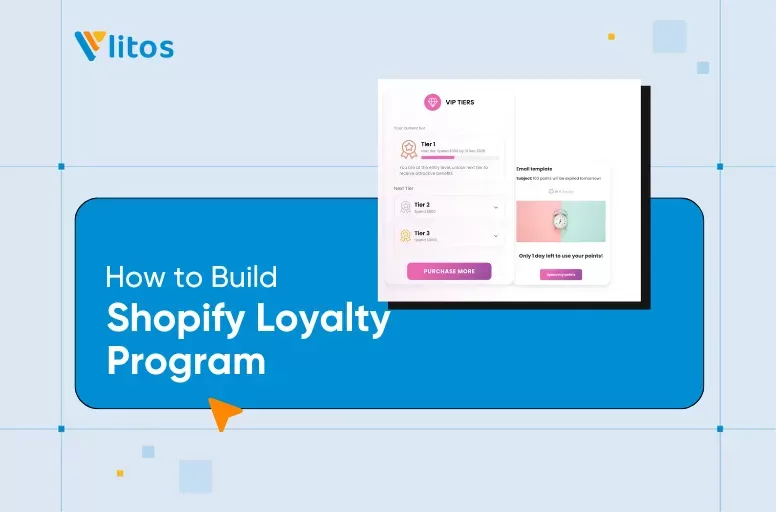
The Complete Guide to Loyalty Programs on Shopify (2025)
A loyalty program can be one of the most effective ways to increase customer retention, drive repeat purchases, and grow long-term revenue on your Shopify store. But with so many tools and approaches available, it can be hard to know where to start – or how to build a program that actually works.
In this guide, we’ll walk you through everything you need to know to create a successful Shopify loyalty program, including:
- What a loyalty program is and why it matters for your eCommerce store
- The most popular types of loyalty programs you can implement on Shopify
- A step-by-step guide to setting up a loyalty program in your store
Let’s get started!
Shopify Loyalty Program: What It Is & Why It Matters
A Shopify loyalty program is a reward system designed to encourage repeat purchases and strengthen customer relationships within your Shopify store. It rewards customers for actions like making a purchase, referring friends, signing up for a newsletter, or engaging with your brand.
Instead of always spending on ads to bring in new shoppers, a loyalty program helps you maximize the value of the customers you already have.
Why does a Shopify loyalty program matter for your e-store? Here are five reasons:
- Loyal customers are more likely to return, reducing your reliance on new customer acquisition.
- Rewards and tiers can incentivize shoppers to spend more per order.
- Many programs include referral features that turn happy customers into brand advocates.
- With more repeat purchases, your store becomes more profitable over time.
- Exclusive rewards, early access, and personal touches foster emotional loyalty.
For Shopify merchants, adding a loyalty program is an effective way to drive sustainable growth, especially when paired with other retention strategies like email marketing and personalization.
Types of Loyalty Programs You Can Implement on Shopify
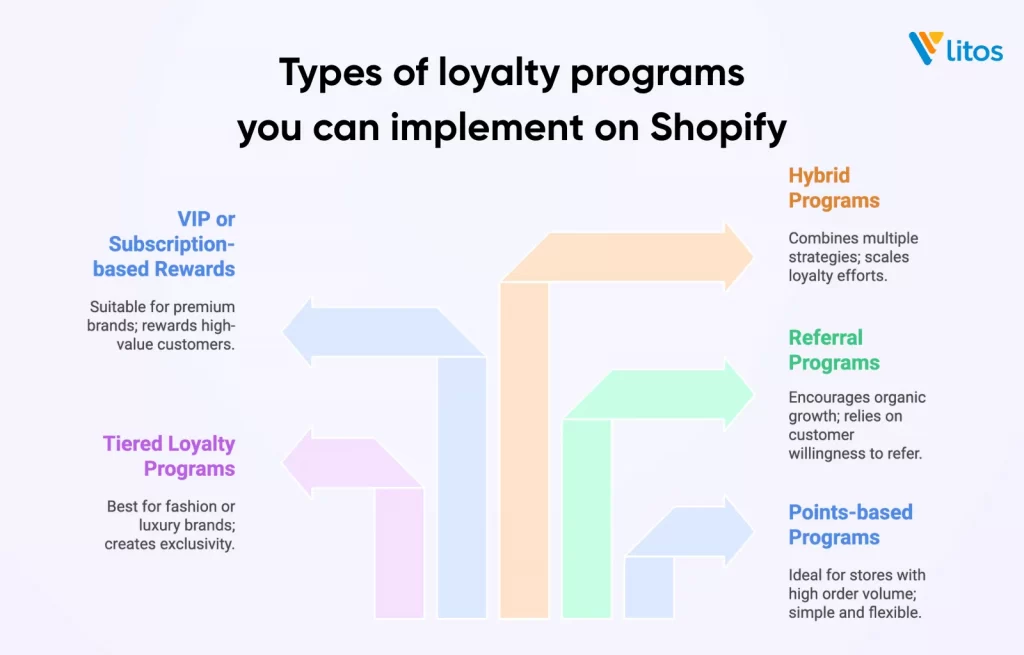
Loyalty programs come in different formats, each designed to motivate customers in a specific way. Some focus on rewarding frequent purchases, while others build long-term engagement or encourage referrals.
1. Points-based programs
In a points-based system, customers earn points for specific actions—such as placing an order, writing a review, or following your social media pages. These loyalty points can later be exchanged for discounts, free products, or shipping perks. This approach is simple, flexible, and widely understood by customers.
- Ideal for: Stores with high order volume or frequent purchases (e.g., beauty, pet supplies, everyday goods).
- Keep in mind: If rewards aren’t clearly explained or exciting, the program may feel too transactional.
2. Tiered loyalty programs
Tiered programs reward loyalty over time. Customers progress through levels—like Bronze, Silver, and Gold—based on their cumulative spending or engagement. Each tier unlocks better rewards, creating a sense of status and exclusivity. This structure motivates shoppers to stay engaged for longer.
- Best suited for: Fashion, beauty, lifestyle, or luxury brands.
- Potential drawback: New customers may need time to feel the program’s value.
3. Referral programs
Referral programs encourage existing customers to invite others to your store. When a friend makes a purchase, both parties receive a reward—like store credit or a discount. It’s a powerful way to grow your customer base organically.
- Works well for: Brands with loyal communities or highly shareable products.
- Challenge: Success relies heavily on your customers’ willingness to refer others.
4. VIP or subscription-based rewards
These programs offer premium advantages—such as exclusive discounts, early product access, or free shipping—to your top customers or paid members. You can base access on spending thresholds or offer a paid membership tier. They’re great for rewarding high-value customers and building brand affinity.
- Recommended for: Premium or high-ticket brands or businesses with subscription models.
- Limitation: May not resonate with one-time shoppers or price-sensitive buyers.
5. Hybrid programs (mix of above)
Each type has its strengths—but also some limitations. That’s why many successful Shopify stores combine multiple types to create a well-rounded loyalty experience.
Rather than choosing one model, many Shopify merchants combine multiple loyalty strategies into a hybrid program. For example, you could:
- Encourage customer loyalty by offering a program built around earning and redeeming points for purchases and engagement
- Add tiers to reward long-term spending
- Include referrals to encourage organic growth
- Offer VIP perks to top-tier customers
Hybrid programs are perfect for Shopify stores looking to scale loyalty efforts and personalize the experience. But here’s the tip: Start with one model, then evolve into a hybrid structure as your customer base grows.
How Do Customer Loyalty Programs Work on Shopify?
On Shopify, loyalty programs work by using apps that integrate directly into your store to track customer behavior, assign rewards, and automate communication. Here’s how the process works in practice:
1. A customer takes an action
Customers earn points or rewards when they complete specific actions you define. Common examples include:
- Making a purchase
- Creating an account
- Referring a friend
- Leaving a product review
- Signing up for your newsletter
You decide which actions are incentivized and how many points each is worth.
2. Shopify tracks that action through a loyalty app
A loyalty app like Smile.io, Yotpo Loyalty, or BON integrates with your Shopify store to track these actions automatically. Most apps use a widget or embedded panel that updates the customer’s point balance in real time. Apps connect with Shopify’s customer data, order history, and user accounts, so every action is tied to a real person and can be monitored across multiple visits.
3. Points or rewards are issued automatically
Once a tracked action is completed, points are assigned to the customer’s profile. The customer can see their balance by logging into their account or checking loyalty emails and notifications. Some programs skip points entirely and issue store credit, gift cards, or discounts directly, depending on your chosen app and reward model.
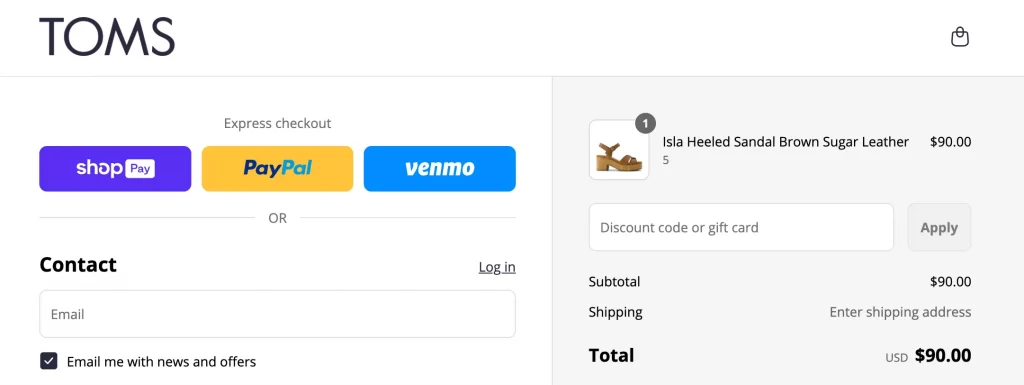
4. Customers redeem rewards at checkout or in-account
Customers can redeem their rewards in two ways:
- In their account: Many apps let customers browse available rewards and choose what to redeem points (e.g., 500 points = $5 off).
- During checkout: Loyalty widgets often integrate with the Shopify checkout process so shoppers can apply rewards with a single click.
5. Rewards and engagement are reinforced through emails & notifications
Most loyalty apps integrate with Shopify Email, Klaviyo, or SMS platforms to send automated reminders like:
- “You’re 50 points away from your next reward.”
- “Congrats! You unlocked Gold tier benefits.”
- “Refer a friend and earn 100 bonus points.”
This keeps the customer engaged and encourages return visits.
6. You monitor & optimize through Shopify admin or app dashboards
All major loyalty apps provide reporting dashboards where you can view:
- Program participation rates
- Redemption frequency
- Repeat purchase rates for loyalty members vs others
- ROI on reward spend
Some apps also allow segmentation based on loyalty tier or point balance, so you can personalize campaigns to build customer loyalty.
How to Create Loyalty Program on Shopify?
Step 1. Choose the right app or custom-build option
There are two main implementation paths for the Shopify loyalty program:
- Use a Shopify loyalty app
- Opt for a custom-built loyalty solution
Using a Shopify loyalty app is the most common option for store owners. Apps like Smile.io, Yotpo Loyalty & Referrals, and Rise.ai offer pre-built loyalty frameworks that integrate directly with your Shopify store. These tools allow you to configure reward types, assign earning rules, and track customer activity often with minimal setup time.
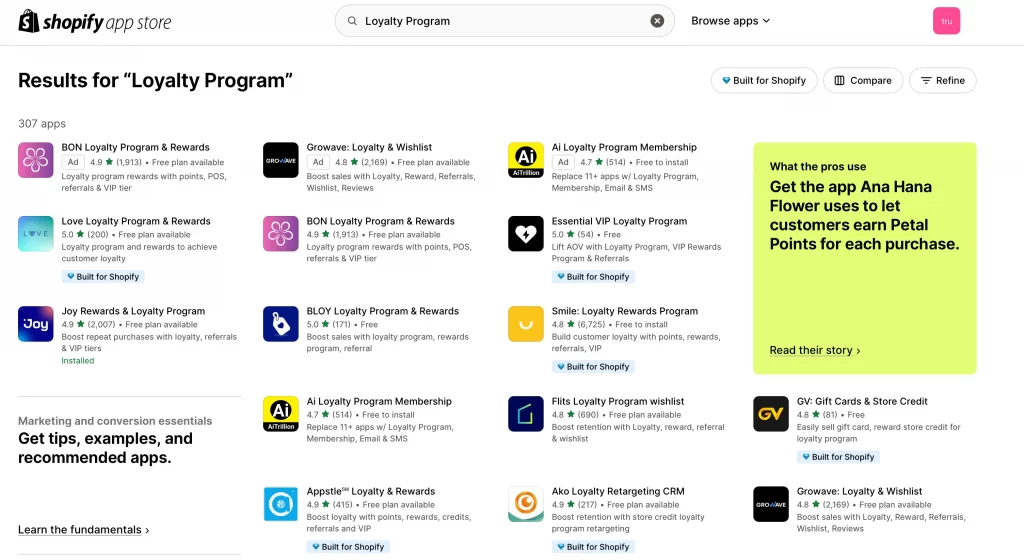
For stores with unique reward logic, advanced tiering, or brand-specific features, working with a Shopify developer or agency to build a custom program may be more suitable. This option allows for full design and feature control but typically requires a larger investment and ongoing development support.
Step 2. Define your reward structure
Before launching, you should clearly define how your Shopify loyalty program will work:
- Earning actions: purchases, reviews, referrals, newsletter signups, social shares, etc.
- Reward types: discount codes, free shipping, free products, early access, store credit
- Points logic: e.g., 1 point per $1 spent; 500 points = $5 off
- Tier levels (if any): set thresholds for reaching new reward levels
- Expiry conditions: set rules for when points or rewards expire (optional)
A well-defined structure helps ensure transparency and increases engagement.
Step 3. Customize design and on-site messaging
Consistency with your store’s branding helps increase trust and participation. Most Shopify loyalty apps allow visual customization, including:
- Naming your program (e.g., “Glow Club,” “Insider Rewards”).
- Choosing program colors, icons, and fonts that match your brand.
- Displaying progress bars, tier badges, or widgets on account and checkout pages.
- Creating a dedicated loyalty page explaining how the program works.
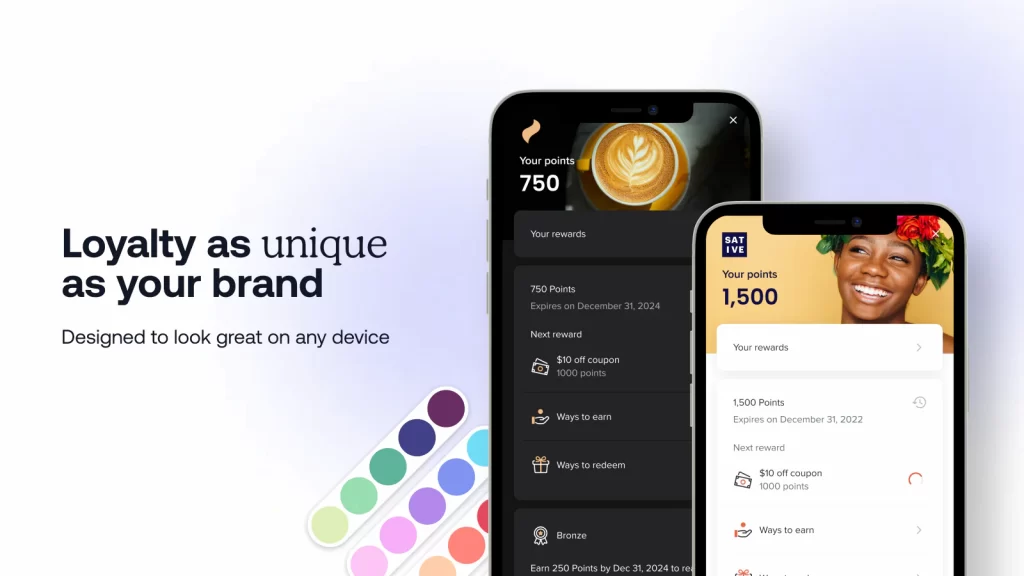
Now, you should make sure messaging is clear and accessible, especially at key customer touchpoints like the product page, cart, and post-purchase screens.
Step 4. Promote your program across channels
A loyalty program won’t drive results unless customers know about it. It’s recommended to promote it consistently across:
- Website: banners, pop-ups, account page callouts
- Emails: welcome sequences, transactional emails, and loyalty-focused campaigns
- SMS or Push Notifications: reminders when points are earned or rewards are unlocked
- Social Media: announcements, stories, and highlights explaining the benefits
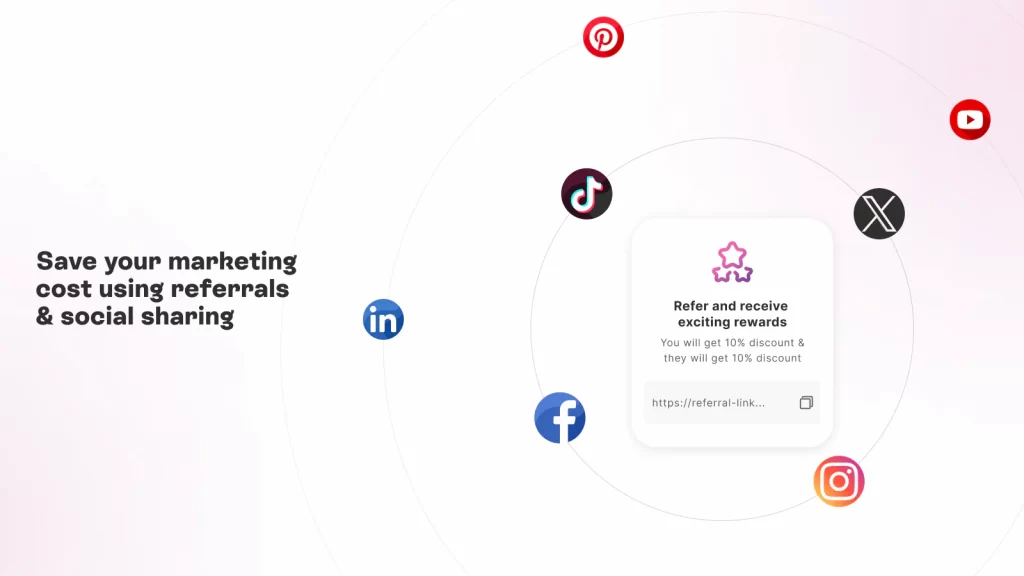
You can use clear CTAs like “Join Now,” “Earn Rewards,” or “Start Collecting Points” to drive conversions.
Step 5. Monitor and optimize performance
Once your program is live, it’s time to track KPIs to evaluate its effectiveness:
- Program sign-up rate
- Percentage of customers actively earning or redeeming rewards
- Increase in repeat purchase rate
- Customer lifetime value (CLV) among loyalty members vs. non-members
With these insights, you can improve your reward structure, adjust communication frequency, or test new incentives. Loyalty programs perform best when treated as ongoing initiatives—not one-time setups.
Examples of Successful Loyalty Programs on Shopify
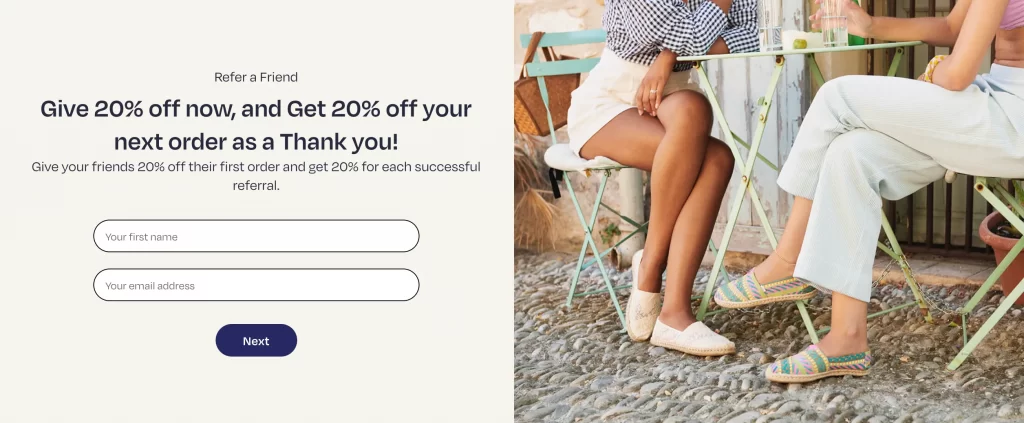
One of best Shopify loyalty program we’ve seen comes from TOMS. It’s built with Yotpo (formerly Swell Rewards) and shows how a loyalty program can drive retention while reinforcing a brand’s values. What’s notable here is clarity and integration.
App: Yotpo (formerly Swell Rewards)
Program: TOMS | Account Rewards
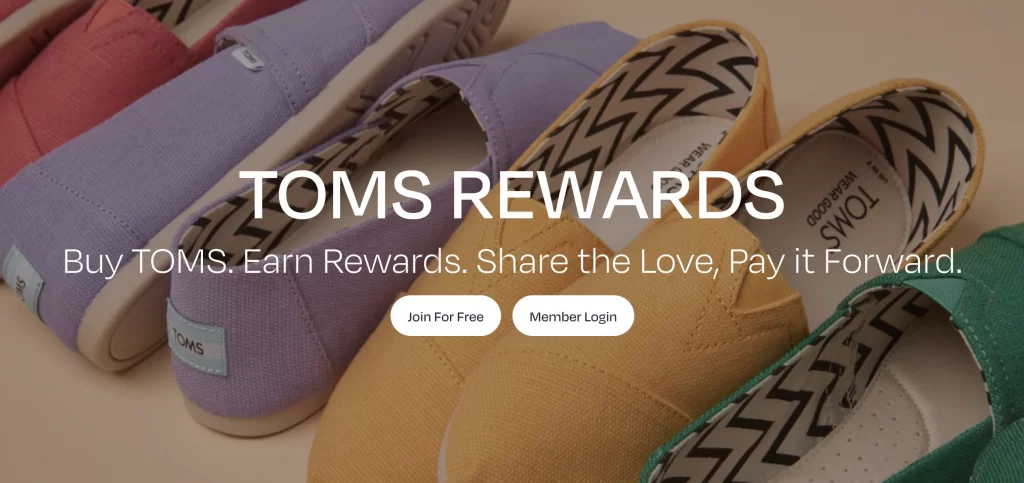
At a glance, TOMS uses a classic points-based model with tiers. But it’s the way they’ve integrated it into the customer experience and brand messaging that makes it effective.
What they’ve done well:
- The structure is simple: sign up, shop, redeem. The “how it works” section is visual and upfront, no guessing required.
- Customers earn points for purchases, birthdays, reviews, and social follows, helping TOMS drive more than just sales. It encourages UGC and brand engagement.
- The program offers standard perks (e.g., $10–$50 off, free shipping) and the option to donate points to causes. It gives customers flexibility without overcomplicating the system.
- The three-tier structure (“Good”, “Gooder”, “Goodest”) encourages re-engagement. Benefits scale, but remain easy to understand.
- Rewards live in the account dashboard, appear across key pages, and are mentioned in follow-up emails.
Why it works:
The program is focused, on-brand, and built to scale. It doesn’t rely on overwhelming features or heavy promotions. Instead, it creates value through consistency, choice, and alignment with what TOMS customers care about.
For Shopify brands with a clear mission or high repeat potential, this model is worth studying. It’s simple, scalable, and tightly aligned with brand and UX.
Best Practices for Running a Loyalty Program on Shopify
A loyalty program only works if it’s designed with intention. Below are key practices we recommend based on what we at LitOS have seen work (and not work) across Shopify stores, especially in post-migration or scaling phases.
1. Start with segmentation
Not all customers engage the same way. First-time buyers, repeat purchasers, and VIPs respond to different types of rewards. You can use Shopify data or loyalty app segmentation features to tailor your offers based on purchase frequency or order value, product category or customer behavior and engagement level (e.g., social, reviews, referrals)
2. Make rewards attainable and meaningful
A common failure point is when rewards feel either too small or too far out of reach. Avoid that by:
- Setting realistic thresholds (e.g., 500 points = $5 off)
- Offering value early (e.g., points for account creation or reviews)
- Giving customers visibility into what they can earn and how fast
3. Keep the experience consistent with your brand
If the reward takes too long to reach or doesn’t feel valuable, customers won’t engage. Set clear earning rules and offer redemptions that are easy to understand and transparent. A structure like “500 points = $5 off” is concrete and predictable; customers know what they’re working toward.
4. Use tools that fit your stage and automate where possible
Select a loyalty platform that aligns with your business’s complexity. Most modern apps offer:
- Pre-built rules for earning and redemption
- Automated email or SMS campaigns
- CRM or marketing integrations (Klaviyo, Gorgias, etc.)
5. Track performance, not just participation
Don’t treat loyalty as a set-it-and-forget-it feature. Monitor performance regularly and refine based on data:
- Repeat Purchase Rate (RPR): Are loyalty members making more purchases?
- Customer lifetime value (LTV): Is the program increasing value over time?
- Redemption rate: Are customers actually using the rewards?
If engagement is low, revisit your incentives, messaging, or placement.
Shopify Loyalty Program: FAQs
Does Shopify have a loyalty program?
Shopify doesn’t offer a built-in loyalty program by default. However, there are many apps available on the Shopify App Store – like Smile.io, Yotpo Loyalty, Rise.ai, and BON Loyalty – that integrate directly with your store and provide full loyalty functionality.
How to set up a loyalty program on Shopify?
You can launch a loyalty program by installing a third-party app, setting your earning and reward rules, and integrating it into key areas of your store. Most apps offer built-in templates for points, referrals, and VIP tiers, with minimal setup required. For full customization, some merchants choose to work with a Shopify developer or agency.
How do mobile apps support Shopify loyalty programs?
Many loyalty apps are mobile-responsive and can be embedded into your Shopify theme, so customers can view and redeem rewards from their phones. Some apps also integrate with mobile-specific tools, such as Shopify’s app builder or third-party mobile apps, to ensure rewards are accessible across devices.
Can you make your own loyalty program in Shopify?
Yes, if you have development resources, you can build a fully custom loyalty program using Shopify’s APIs. This gives you full control over how rewards are calculated, displayed, and redeemed – but requires technical planning. Most merchants begin with a loyalty app and add custom features as their business expands.
Final Thoughts
A loyalty program isn’t always the first thing a store needs, but for many Shopify merchants, it becomes one of the most effective long-term growth tools.
If your store already attracts returning customers, has high repeat potential, or experiences strong engagement through email and referrals, a loyalty program can help you formalize and scale that behavior. It gives your customers a reason to stay with your brand longer and provides you with more data to work with as your business grows.
However, it must be built with a purpose. A loyalty program only works if it’s well-structured, visible throughout the shopping experience, and easy for customers to understand and use. That’s why we recommend starting simple, testing what drives results, and evolving the program over time.
At LitOS, we specialize in custom Shopify Development, so whether you need help implementing a loyalty app, customizing its design, or building a completely tailored loyalty experience, our team is here to support you. Let’s turn your store into a brand your customers keep coming back to.
Need help mapping it out? Get in touch with our team →