
How to Sell T Shirts on Shopify: 8 Steps to Get Started
Over the past few years, T-shirt selling has remained one of the most stable and profitable product categories on Shopify. That’s because T-shirts are universal, easy to customize for different audiences, and flexible enough to follow shifting design trends. Still, to truly succeed in this field, you need to learn how to sell T shirts on Shopify with a clear goal and roadmap from day one.
No worries; we’re here to help! In the next sections, we’ll walk you through the full process step by step. Let’s begin!
Is Selling T-shirts on Shopify Profitable?
Yes, selling T-shirts on Shopify can be very profitable for sellers who combine strong niche positioning with efficient print-on-demand operations.
Below are 3 key benefits of starting your T-shirt business on Shopify:
- User-friendly platform: Even beginners can set up a store, connect a print-on-demand supplier, and start selling within a relatively short time.
- Easy scalability and customization: Shopify’s large app ecosystem allows store owners to add features such as automated fulfillment, email marketing, analytics tracking, conversion optimization, etc.
- Affordability: The relatively low startup cost compared to traditional retail or bulk manufacturing models is another benefit. Since products are only produced after customers place orders, it reduces inventory risk and makes it easier to test multiple designs before scaling production.
Nevertheless, keep in mind that the T-shirt market is still highly competitive as many new stores enter the market every year. Hence, to succeed, you need to learn how to sell Tee shirts online using a structured, smart launch process, which is exactly what the following sections will cover in detail.
How to Sell T Shirts on Shopify in 8 Steps
To start a T-shirt business on Shopify, you need to first identify a niche with proven demand, then create designs and connect with a print-on-demand supplier. From there, set up and optimize your store, organize products for easy browsing, and promote your store to bring in traffic:
Step 1. Define your audience, niche, and competitors
When launching a T-shirt store on Shopify, remember that a clearly defined niche usually leads to better early results than targeting a broad audience.
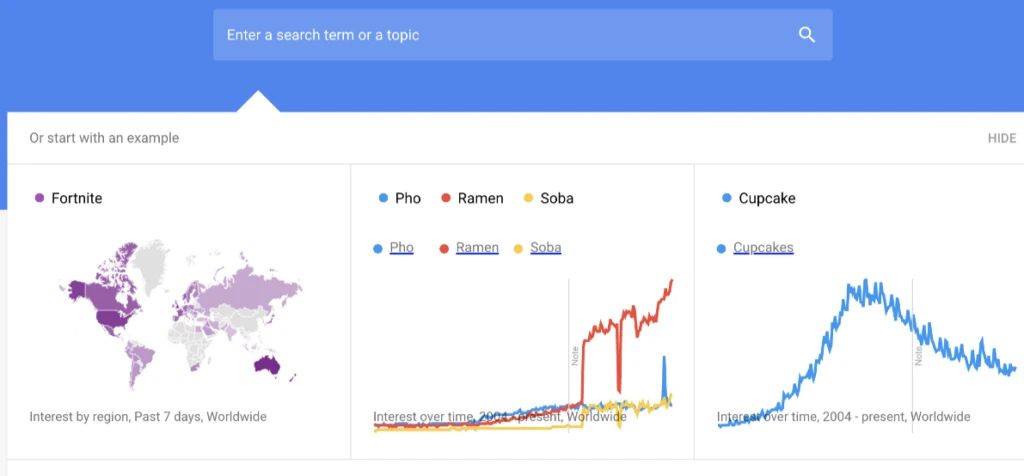
Hence, one easy starting point is to identify niches that already show visible demand for printed apparel. You can validate demand by searching your niche keyword together with terms like “t-shirt” or “graphic tee.” If search results consistently show at least 5 to 10 active stores selling similar products, that is a strong sign that customers in this niche are already comfortable buying printed apparel online.
Once you confirm that demand exists, it’s time to understand how your competitors structure their stores. We recommend spending time reviewing competitor product catalogs, especially their best-selling products and new arrivals. From our observation, many successful print-on-demand stores usually launch with around 10 to 30 designs in their initial catalog, which is large enough to make the store look credible while still being manageable for a new business.
Step 2. Create or source t-shirt designs
At this stage, the goal is not simply to create visually attractive artwork, but to produce designs that work well as real products and perform well inside a Shopify storefront environment.
- If you are designing graphics yourself, review the 20–30 best-selling designs within your niche to identify common patterns. These may include recurring color combinations, typical text length, or common layout positioning.
- If you are working with freelance designers, providing clear technical guidelines can help avoid production and cost issues later.
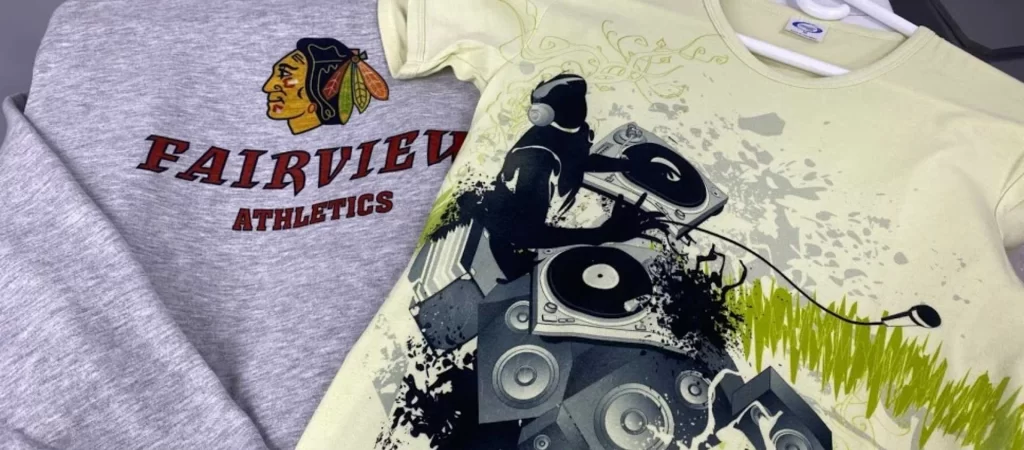
Also, before uploading products into Shopify, you should prepare multiple mockup types to improve product presentation. At a minimum, there should be one clean product mockup and one model mockup per design, which helps buyers visualize real-world usage more easily.
Step 3. Select a print-on-demand or supply model
After preparing your design lineup, it’s time to decide how products will be produced and delivered to customers.
For most new Shopify t-shirt businesses, print-on-demand remains the most practical starting model, as you can sell t-shirts online without inventory before demand is proven. When evaluating suppliers for this approach, make sure you order 2–3 sample products before launch, so that it’s easier to assess their print clarity, color accuracy, fabric comfort, and packaging quality. Learn more about how to connect Printify to Shopify here.
In addition, shipping and production timelines should also be considered. The recommenđ production window should be approximately 2 to 5 business days, followed by shipping time depending on customer location.
Step 4. Set up your store
Once your products and supply workflow are ready, the next step is building a storefront that makes purchasing simple and trustworthy for first-time visitors. Some of our suggestions:
- Choose a clean, product-focused theme
- Use simple layouts to maintain fast loading speeds and keep visual attention on products.
- Build core store pages first, including a homepage, product catalog page, about page, contact page, and shipping and returns policy page.
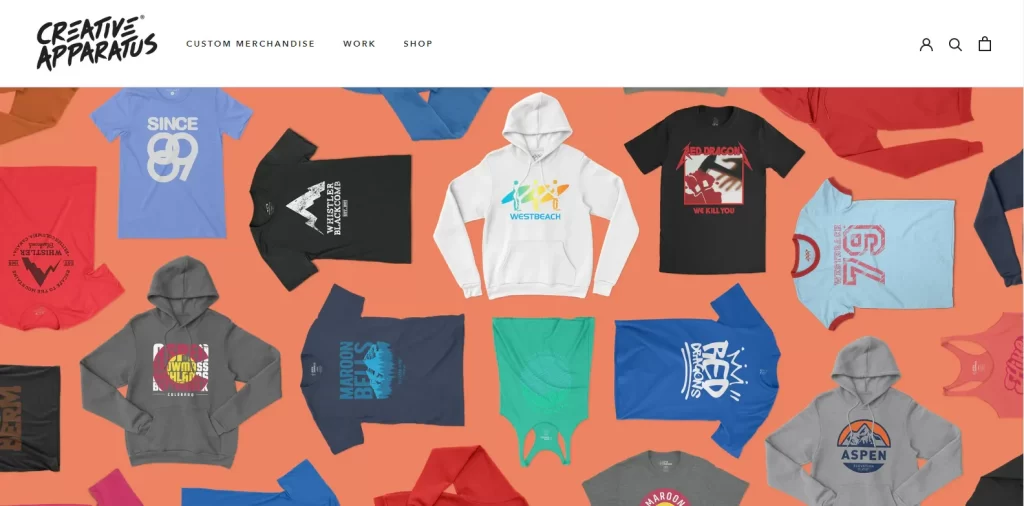
After connecting your print-on-demand provider, products are often automatically imported into your Shopify dashboard. However, these listings usually require manual refinement, so make sure you adjust product titles and rewrite strong descriptions that match the brand tone. We will discuss that further in the next step.
And most importantly, before launching publicly, do not forget to test the full purchase experience. You should run at least one full checkout test on desktop and one on mobile to pinpoint issues, such as setup errors, payment method problems, checkout flow bugs, etc.
Step 5. Optimize t-shirt products
Products imported from POD apps are usually functional but not optimized for conversion. Hence, at this step, you need to turn your imported products into listings that customers are willing to buy from:
- Product titles: In most cases, shorter and clearer titles perform better. A common structure is Design Name + Product Type + Niche or Style, and you should keep the total length roughly under 60–70 characters.
- Descriptions: Customers want quick answers to three questions: how it feels, how it fits, and how it holds up after washing. Hence, for early-stage stores, it’s best to include fabric composition, fit type (regular, relaxed, or slim if available), and basic care instructions.
- Images: Each product should ideally include at least 3–5 images. A typical high-performing structure includes one clean mockup on a plain background, one lifestyle or model image, and one close-up showing print texture or detail.
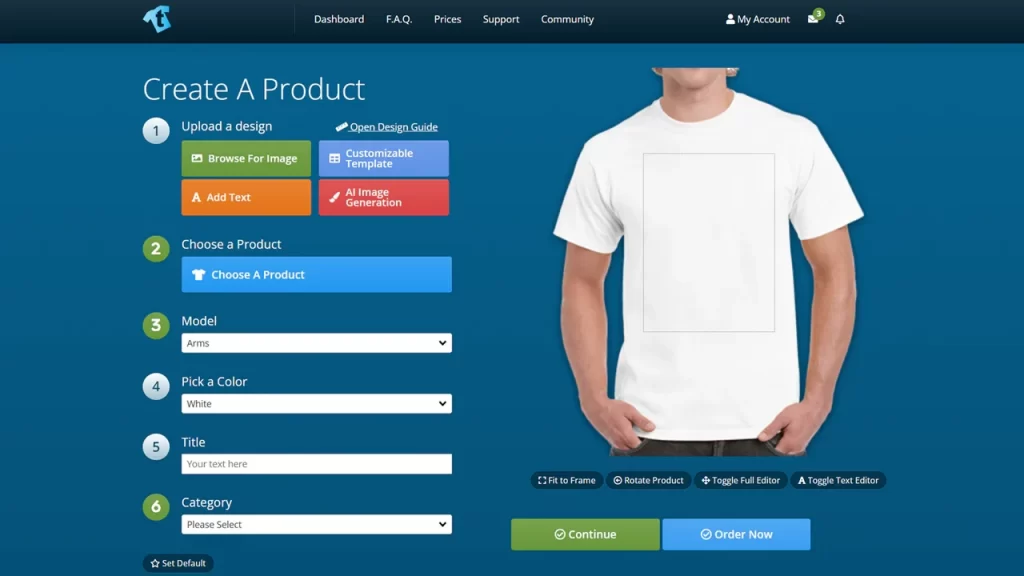
Also, pricing should be carefully reviewed before launch. Many new Shopify POD stores price shirts between roughly $24 and $35, depending on brand positioning and supplier cost. Pricing too low can reduce perceived quality, while pricing too high without brand trust can reduce conversion; therefore, starting in the mid-range is often the safest approach.
Step 6. Organize collections and improve store UX
After products are optimized individually, the next priority is making it easy for customers to browse your store. New visitors rarely scroll through full catalogs, after all, meaning clear product organization will directly improve conversion rate and average order value.
Many of the best T-shirt Shopify stores benefit from launching with 3 to 6 core collections, which can be organized by niche segment, design style, or use case. Based on our observation, you can start with three categories like this:
- Best Sellers
- New Designs
- Niche-specific collections.
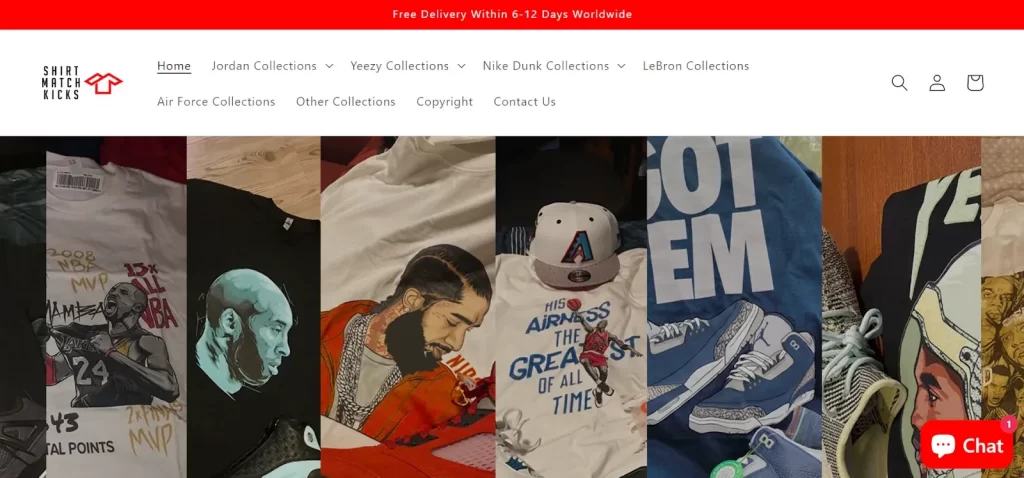
Similarly, the navigation structure must stay simple to avoid decision fatigue for first-time visitors, and the homepage layout should guide visitors toward products quickly. A common structure is hero banner, featured products, then best sellers or new arrivals.
And needless to say, mobile experience is very important for Shopify T-shirts stores. So, make sure you check how collections display on mobile devices, and whether product images remain clear and text remains readable. Otherwise, even small spacing or image cropping issues can reduce browsing comfort.
Step 7. Promote your T-shirts
Your Shopify store is structured and products are optimized at this point; now, traffic generation becomes the main focus. In general, for new print-on-demand stores, it is usually more effective to focus on 1–2 marketing channels instead of trying to be active everywhere at once.
Social content, for example, is often the most accessible starting point.
T-shirt products perform well with short videos, lifestyle photos, and simple product showcases. You should also post consistently (for example, 3–5 times per week) rather than posting heavily for a short period and then stopping.
Other marketing strategies to consider:
- Influencer or micro-creator partnerships: Smaller creators often have more engaged audiences and are usually more open to product-based collaborations. Just sending 5–10 free shirts to them is enough to generate content and visibility.
- Email collection: You may add a basic email signup incentive, such as early access to new designs or small launch discounts, to build a consistent audience without relying entirely on social algorithms.
- SEO: Even for new stores, optimizing product titles and descriptions for niche keywords can gradually generate organic traffic. Though SEO results are usually slower than social traffic, they still bring higher purchase intent because customers are already searching for products to buy.

Step 8. Improve your store and products based on real customer data
Last but not least, once your Shopify store starts receiving traffic and orders, data becomes your most reliable decision-making tool. Important early signals include:
- Which products get the most clicks
- Which products convert best
- Which pages have high exit rates.
Customer reviews and support messages are also valuable sources of product insight. If multiple customers mention sizing concerns, print feel, or shipping expectations, you should make sure to address those topics properly in product pages or FAQs.
Common Pitfalls When Selling T-Shirts on Shopify
Despite knowing how to sell custom T shirts on Shopify, many merchants still struggle because of operational or strategic risks, including copyright violations, over-dependence on the supplier, and cash flow pressure caused by extra costs:
1. Accidentally violating copyright or trademark laws
One of the fastest ways to lose a Shopify store or face legal trouble is selling designs that infringe on copyrighted content. This risk is especially high in niches connected to pop culture, gaming, movies, sports teams, or viral memes. Even if similar designs exist online, that does not automatically mean they are legally safe to sell.
So, when you sell custom T-shirts, it’s best to avoid using:
- Brand names or logos
- Movie, anime, or game characters
- Song lyrics or famous quotes
- Meme templates tied to specific creators or brands
2. Relying too heavily on one POD supplier
From our observation, many new stores connect to one print-on-demand supplier and never prepare a backup option. That usually becomes a serious problem when suppliers experience production delays, stock shortages, or quality inconsistencies, all of which happen a lot in the POD industry.
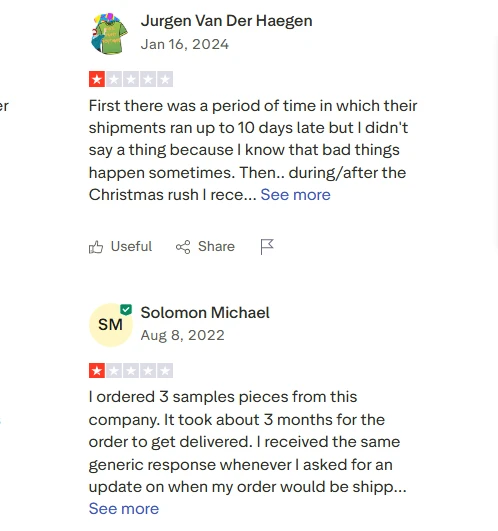
Hence, a safer long-term strategy is to test at least one backup supplier early. You do not need to list backup products publicly, but having an alternative production option makes it easier to respond to supply disruptions.
3. Underestimating refunds, chargebacks, and hidden cost pressures
New T-shirt sellers often calculate profit based only on product cost and selling price. But in reality, the following additional costs can appear quickly, especially once order volume increases:
- Refunds and replacements (even a refund rate of 3–5% can noticeably affect profit margins if not planned for)
- Chargebacks and payment disputes
- Shipping costs (which tend to fluctuate for international orders or during holiday seasons)
Hence, to master how to make money selling t-shirts on Shopify, you should learn to build a buffer margin into pricing from the beginning rather than reacting after issues appear. Many profitable stores aim for a structure like this:
Target Selling Price = (Product Cost + Fulfillment + Platform & Payment Fees) ÷ (1 − Buffer Margin)
The buffer margin typically ranges from 15–25%, depending on refund rates and shipping volatility.
3 Shopify Successful T-Shirt Stores to Model Your T-Shirt Brand After
Step-by-step tutorial aside, it also helps to study real Shopify stores that are already performing well in the market. Three strong examples are Got Funny Merch, The Philosopher’s Shirt, and Illuminated Apparel:
1. Got Funny Merch

Got Funny Merch is a Shopify-powered online apparel store specializing in humorous graphic apparel, especially text-based T-shirts built around viral or relatable jokes. The brand focuses on lighthearted, entertainment-driven fashion and frequently uses bundle promotions to encourage multi-shirt purchases.
Why it works
- Virality: The brand is built around fast-moving cultural humor. Instead of investing heavily in timeless fashion design, they focus on ideas that can go viral quickly and be replaced just as fast.
- Collection-based merchandising and loyalty tactics: They group designs into themed collections (such as cause-based or seasonal themes) and use reward programs to improve repeat purchase rates.
- Simple product strategy: For most of the products, the brand relies on recognizable text graphics, clear messaging, and mass-appeal humor. That combination makes marketing easier and lowers the creative cost per design.
2. The Philosopher’s Shirt
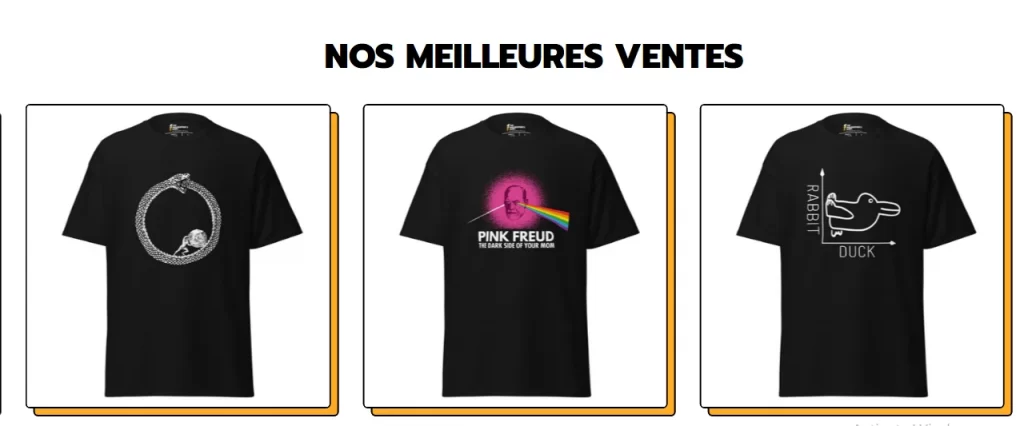
Second on our list is The Philosopher’s Shirt, a niche brand built around philosophy-themed graphic merchandise that targets students, academics, and intellectual hobbyists. The store launched in 2016 after the founder identified T-shirts as a strong ecommerce opportunity and combined that with his background in philosophy and marketing.
The brand sells printed apparel featuring philosophy jokes, memes, and references to major thinkers such as Aristotle and Nietzsche.
Why it works
- Extreme niche clarity: This is the biggest driver of its success. The founders intentionally avoided trying to appeal to everyone and instead focused on customers already familiar with philosophy, which makes marketing messaging far more efficient.
- Premium quality: They prioritized premium perceived quality, choosing higher-quality POD production instead of cheaper alternatives. The founders noted that higher prices often reinforced perceived quality for customers.
- Community and engagement: Product selling aside, the store also provides educational explanations of philosophical concepts and direct engagement with customers through social media and newsletters.
3. Illuminated Apparel

Lastly, Illuminated Apparel is a UK-based fashion brand and online retailer that sells interactive glow-in-the-dark T-shirts and related products. The brand grew from a one-person startup into a globally distributed product line sold in more than 35 countries.
Their signature product allows users to draw designs directly onto a glow canvas using light. The designs can fade and reset for repeated use, which turns each T-shirt into an interactive experience.
Why it works
- Unique niche: Unlike most POD apparel brands that compete on graphics, Illuminated Apparel competes on product innovation. The shirt itself is the unique selling point, not just the printed design.
- Effective marketing: The brand built strong visibility through media exposure and storytelling, including appearances on TV programs and startup showcases. These tactics helped legitimize the product as a real innovation rather than novelty merch.
How to Sell T-Shirts on Shopify: FAQs
Can you make money selling t-shirts on Shopify?
Yes, it is possible to make money once you learn how to sell tee shirts online on Shopify. You can leverage print-on-demand (POD) services to minimize upfront inventory costs.
Do I need a business license to sell shirts on Shopify?
No, Shopify does not require a business license to open a store. However, you will likely need one to operate legally based on local, state, or national regulations.
Does clothing sell well on Shopify?
Yes, clothing sells exceptionally well on Shopify. In fact, Shopify is a top platform for apparel due to its user-friendly interface, customizable themes, and powerful apps for handling inventory, sizes, and colors.
What are common Shopify selling mistakes?
Common selling mistakes among T-shirt businesses on Shopify are: neglecting mobile optimization, using poor-quality product images/descriptions, ignoring SEO, and having a complicated checkout process.
Final Words
Many assume learning how to sell T shirts on Shopify simply involves launching the best designs or finding a winning niche. But that’s not all; you also need to choose a clear target audience, work with reliable fulfillment partners, and consistently improve based on real customer behavior.
Not to mention, as your store starts gaining traction, scaling efficiently becomes just as important as launching correctly. That’s where having strong technical support from expert services like LitOS can make a real difference!
Ready to turn your T-shirt idea into a scalable Shopify store?
At LitOS, we help merchants build and grow Shopify stores the right way, from setting up print-on-demand workflows and optimizing product pages to improving performance, UX, and long-term scalability. Talk to our Shopify expert and start building a store that’s ready to grow!
Contact Us
